
Zuma Global: Active Value Creation in Commercial Real Estate
While most investment firms chase stable, income-producing assets, Zuma Global has built itself precisely around the properties others prefer to avoid. The company’s approach — combining entry into distressed assets with a disciplined value-add process — positions it as a distinctive and prominent player in the commercial real estate market.
The commercial real estate market runs on a conventional logic. Investors look for stable, occupied, income-producing assets and pay a price that reflects that stability. Zuma Global, a private real estate investment firm owned by entrepreneur Israel Figa, built its model on the opposite logic. Instead of seeking stability, it seeks out the very assets that are in difficulty, seeing opportunity where others see risk.
This approach, which the company has made the core of its activity, is what sets it apart in the investment landscape. Zuma Global does not settle for passive buy-and-hold; it moves into complex assets, applies a structured turnaround process, and transforms them from problematic holdings into stable, profitable ones. It is a model that demands a rare combination of capital, operational know-how, and execution capability — and few firms are willing to take on that complexity.
The Logic Behind the Method
The central idea behind Zuma Global’s approach is simple to understand but complex to execute. A property that is run inefficiently, suffers from operational problems, or is occupied by problematic tenants is priced by the market below its true potential. That gap — between the current price and the value that can be unlocked from the property after improvement — is exactly the space in which the company operates.
To realize that gap, the company applies a structured process. It identifies a property with unrealized potential, acquires it at a price that reflects its current condition, and then invests in improving it systematically. Once the property stabilizes and begins to generate high, steady income, its value rises accordingly, and the realization stage arrives. This is a complete cycle — from sourcing a distressed asset to selling it at a profit — that embodies the company’s entire philosophy.
The company describes this capability as “getting a property onto the wave.” The meaning is not merely buying a cheap asset, but taking active steps that change its trajectory. It is an approach that Israel Figa, the company’s owner, developed as its core, and it is what distinguishes passive investment — where the investor hopes for natural appreciation — from active investment, where the investor creates the appreciation.

Case Study: A Turnaround in South London
One example that illustrates the method is a deal Zuma Global carried out in South London. The property was acquired while suffering from a fundamental problem: the tenants occupying it were problematic, many of them failing to meet rent payments, and its income was far below potential. By conventional market standards, such a property is considered problematic. For Zuma Global, it represented exactly the kind of opportunity it seeks.
The process was implemented in stages. First, the company removed the problematic tenants and regularized the property’s condition. It then made a capital investment in upgrading the building, including the creation of a new, impressive entrance lobby that changed the property’s appearance and the entire feel of the place. The upgrade was not intended to be merely aesthetic, but to serve as a tool for attracting a higher-quality tenant base.
The impact was evident in the results. The upgraded building and new lobby allowed the company to bring in new, higher-quality tenants, and with them rents and total income from the property rose. Once the asset stabilized and delivered strong income, its value climbed significantly, and the company realized it in a profitable sale. The case illustrates how a well-managed process turns a loss-making property into an income-producing one.

A Presence in Emerging Markets
Part of Zuma Global’s model is the early identification of areas with growth potential. One example is the significant presence the company established in Slough, west of London. Slough — strategically located near the capital and Heathrow Airport — has developed in recent years into one of the most important commercial real estate hubs in the region, and the company has completed several large deals there.
The choice of Slough illustrates the company’s data-driven approach. Rather than waiting for an area to become sought-after and expensive, Zuma Global identifies the potential at an earlier stage. The combination of rising business demand, proximity to employment centers, and well-developed transport infrastructure turned Slough into a destination that fits the company’s strategy precisely.
Execution on the Ground
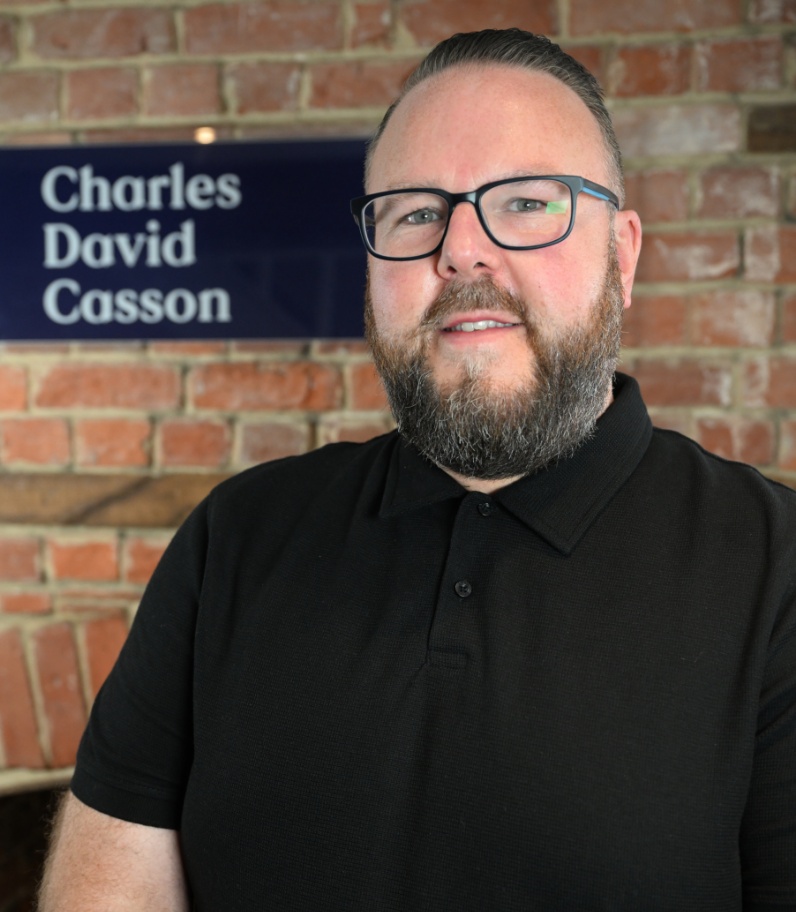
The value-add model cannot work without a strong on-the-ground management arm, and so Zuma Global relies on two professional property management firms. The first is Charles David Casson, headed by Neil Baldock. The second is Maple Group, an experienced London-based property management firm specializing in the full management of income-producing assets — including tenant management, rent collection, maintenance and upkeep, and supporting owners on regulatory and legislative matters. One of the company’s largest projects is managed by Maple Group.
This division of labor is an essential part of the model. When Zuma Global moves into a distressed asset, most of the work is done in the field: managing tenants, overseeing renovations, regularizing operations, and handling the small details that affect a property’s value. The clear separation between the investment team, which focuses on strategy and deal sourcing, and the management firms, which focus on operational execution, is what allows the value-add process to work consistently.
The Investment Discipline Behind the Approach
Although the model focuses on distressed assets, it is not built on taking high risks. In fact, the company applies a conservative underwriting approach that prioritizes long-term value and capital preservation. Every investment undergoes rigorous, multi-layered due diligence — including financial, legal, and physical analysis of the property before any commitment — and the financial modeling tests multiple scenarios to ensure the investment holds up even under less optimistic market conditions.
This balance — between a willingness to take on complex assets and a discipline of conservative underwriting — is what allows the company to operate in a space others avoid. The company’s figures reflect the scale of its activity: a portfolio of more than £80 million in assets under management, more than fifty completed investments over the years, and an average internal rate of return of over twenty percent, according to company data. Its activity spans a wide range of asset types, from commercial and multi-family properties to development projects and private holdings.
A Company That Creates Value Out of Complexity
Ultimately, Zuma Global’s work demonstrates a different approach to the commercial real estate market. Instead of competing over mature, stable assets, the strategy led by Israel Figa focuses on generating value out of complexity. It is a reminder that, through rigorous financial analysis and tight on-the-ground management, underperforming properties can be turned into stable, profitable economic anchors.